

The word “the” sits so quietly inside everyday sentences that most people never stop to ask what it actually does. Yet this three letter word shapes meaning more than almost any other part of English grammar, deciding whether we are talking about something specific or something general. Many learners and even native speakers type “what is the” into search boxes when they want a plain, reliable explanation of how this small word works.
This guide answers that question in full, walking through the definition, the grammar rules, the history, and the common mistakes people make with “the.” It also covers the many typo variations and incomplete phrases that show up in search results, since search boxes rarely see perfect spelling. Whether the goal is passing an English exam, writing cleaner emails, or simply understanding why “the” appears where it does, the explanations below are built to be clear and immediately useful.
By the end of this article, the mechanics of “the” should feel far less mysterious. The sections move from quick definitions into deeper grammar, real examples, and practical tips, so readers can jump to whichever part answers their question fastest. Anyone asking what is the meaning behind this tiny word will find a complete, straightforward answer here.
Quick Answer
“The” is the definite article in English, and it points to a specific noun that both the speaker and the listener already recognize. Saying “the dog” means one particular dog, not any random dog wandering by. It pairs with singular nouns, plural nouns, and uncountable nouns whenever the item is already clear from context. Unlike “a” or “an,” which introduce something new or unspecified, “the” always signals familiarity.
What is the
“What is the” is one of the most common ways a question begins in English, and it almost never stands alone. People type it right before the real topic, producing phrases like what is the meaning, what is the purpose, or what is the difference. Search engines see this opener constantly because users often type quickly and add the subject a beat later. A helpful response focuses on whatever follows the phrase, since that is where the actual intent lives.
Whats the
“Whats the” is simply an informal, apostrophe free version of “what’s the,” which itself is short for “what is the.” People drop the apostrophe when typing fast on a phone or filling in a search bar. The phrase can lead into almost anything: whats the meaning, whats the point, whats the deal. Context from the following words always clarifies intent, so the best response treats it exactly like its properly punctuated cousin.
What is the
“What is th” usually represents an unfinished search rather than a distinct expression. Someone likely began typing “what is the” and either paused, hit enter too soon, or got interrupted mid thought. There is no independent meaning attached to “th” on its own in this context. Recognizing the phrase as incomplete, rather than treating it as a special term, leads to a far more useful response for the person who typed it.
What are the
“What are the” shifts the question toward plural subjects, appearing in searches like what are the benefits, what are the symptoms, or what are the rules. This phrase signals that the searcher expects a list or a set of related points rather than one single answer. Because the core subject is still missing on its own, a strong response identifies that subject quickly and then organizes the answer into clear, digestible points.
What is the
A stray period after “what is the” almost always reflects an accidental keystroke rather than intentional punctuation. The sentence stops before naming its subject, leaving the reader unsure what is actually being asked. This pattern shows up often on mobile keyboards where autocomplete or autocorrect inserts punctuation unexpectedly. Once a topic like meaning or definition follows, the sentence becomes a complete and answerable question.
What is the what is the
Repeated phrases like “what is the what is the” typically happen when a search box duplicates text during typing, copying, or a slow connection. It is not a recognized grammatical structure with its own meaning. The underlying question is still just “what is the,” waiting for a subject to attach itself to. Treating the repetition as noise and focusing on likely intent produces a much clearer answer.
What is thw
“What is thw” is almost certainly a fat finger error for “what is the,” since w sits right next to e on a standard keyboard. This kind of letter swap happens constantly during fast typing. Thw has no independent meaning in English, so correcting it mentally to “the” and looking for the intended topic afterward is the right approach for any reader trying to make sense of the query.
Whats th
“Whats th” combines two small slips at once: a missing apostrophe and an unfinished word. The searcher most likely meant to type “what’s the” and stopped before completing “the.” As with other incomplete fragments, the meaning only becomes clear once a subject follows, whether that is a definition, a reason, or an explanation the person is hunting for.
What is the
“What is tha” could point in two directions depending on intent. If the person meant “what is that,” they may be asking about something they just noticed or heard about. If they meant “what is the,” the sentence is simply missing its ending. Fast typing and autocorrect both contribute to this kind of ambiguity, so reading the surrounding context is the fastest way to figure out which question is really being asked.
The meaning
“The meaning” often appears when someone wants to understand what a word, symbol, or phrase represents. It is not a complete question by itself, but it clearly signals a request for explanation, as in “the meaning of resilience” or “the meaning behind a phrase.” A solid answer states the core meaning plainly and often adds a short example, since meanings can shift depending on context and usage.
What is the
“What is ghe” is a keyboard slip where g replaced t, most likely because the two keys sit near each other on certain layouts or because of a rushed thumb on a touchscreen. Ghe carries no meaning of its own in English. Correcting it back to “the” and then supplying the missing subject, whether that is a word, an object, or a concept, is what actually resolves the search.
Definition of the
“Definition of the” usually signals someone wants the precise meaning of a specific term, with “the” functioning as part of the surrounding sentence rather than the subject itself, as in “definition of the word irony.” A useful definition stays accurate and easy to follow, avoiding technical jargon unless the audience specifically needs it. Without the missing subject, though, the phrase alone gives too little to work with.
The definition
“The definition” points toward an explanation of a particular word, phrase, or idea, but the phrase is incomplete without naming what needs defining. People often type this while still forming their thought, planning to add the actual subject afterward. A clear definition tells the reader exactly what something means and, when helpful, includes a short example to anchor the explanation in something concrete.
What is the
“Whatisthe” is simply “what is the” typed without spaces, a common result of fast typing, autocomplete, or copying text from somewhere else. It carries no separate meaning of its own. Reading it as three normal words instantly restores its usual function as a question opener, still waiting for a topic like meaning, difference, or purpose to follow it.
What is the
“What is tje” is a small letter transposition, most likely meant to be “what is the,” with h and j sitting close together on a QWERTY keyboard. Tje has no standing as an English word or abbreviation. Once corrected, the sentence needs its usual missing piece, whether the searcher wants a meaning, a definition, or an explanation of some other topic entirely.
What what is the
Doubling the word “what” at the start of a query almost always comes from an accidental repeat keystroke or a copy paste error rather than intentional phrasing. The real question underneath is still just “what is the,” and it still needs a subject to become complete. Removing the extra word and adding the topic clears up the confusion immediately.
What is the
“What is fhe” swaps f in for t, another neighboring key error on many keyboard layouts. Fhe is not a recognized word or abbreviation in English. As with similar typos throughout this list, correcting the spelling to “the” and then supplying a subject, such as meaning or purpose, is what actually answers the underlying question the person had in mind.
What is the? in grammar
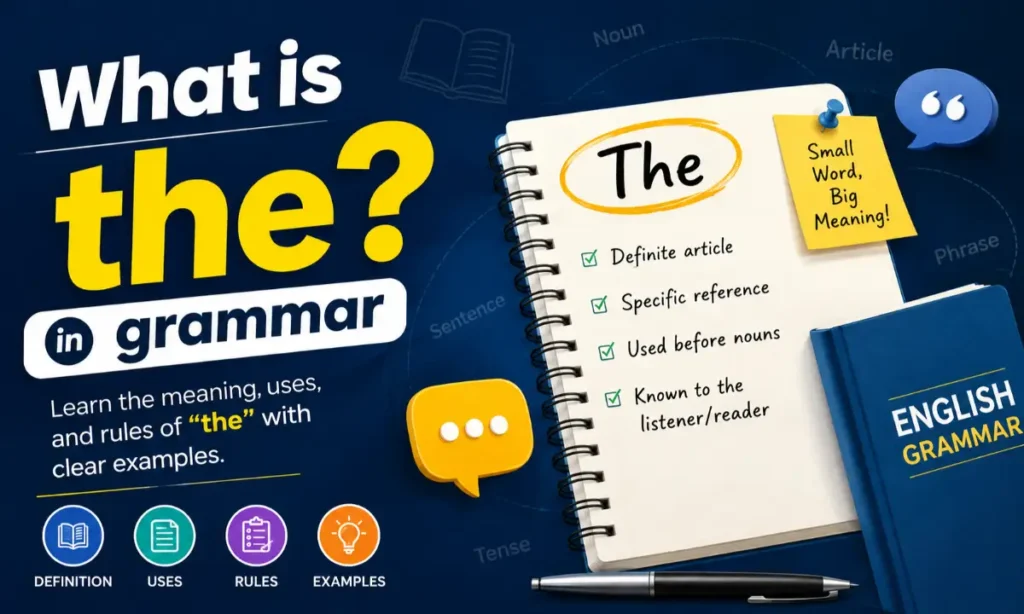
Within grammar specifically, “what is the” functions as the definite article paired with a question structure, asking for information about something already identified or about to be identified. Grammatically, “the” itself never changes form regardless of gender, number, or case, which sets English apart from many other languages. Understanding this grammatical role is the foundation for every other rule covered later in this guide.
Whatis the
Dropping the space between “what” and “is” produces “whatis the,” another byproduct of quick typing rather than a distinct phrase. The intended meaning is unaffected once the words are read correctly. As always, the sentence only becomes useful once a topic follows, such as “whatis the meaning of irony” reworked properly into “what is the meaning of irony.”
Whats the
Stray punctuation surrounding “whats the” almost always comes from typing mistakes, misplaced periods, or autocomplete suggestions rather than any intentional style. The apostrophe is also missing here, so the phrase really represents “what’s the,” still lacking its subject. Cleaning up the punctuation and adding a topic transforms this fragment into a clear, complete question.
What is th
“What isth” merges “is” and part of “the” together, most likely from typing too quickly or an autocorrect suggestion gone wrong. Isth is not a word or abbreviation with independent meaning. Reading the phrase as “what is th,” and further as “what is the,” restores its usual meaning, though a subject still needs to follow for the question to make full sense.
What is tbr

Unlike most entries on this list, “what is tbr” is not necessarily a typo. TBR is a genuine abbreviation, most often standing for “to be read,” widely used among readers and book communities online. Context determines whether someone meant TBR as this abbreviation or mistyped “the.” When the surrounding conversation involves books or reading lists, TBR almost certainly means “to be read.”
Whats the
“Whats thr” drops the final e from “the,” likely because a finger lifted off the key too early during fast typing. The apostrophe is also missing from “what’s.” Once both small errors are corrected, the sentence reads as “what’s the,” still needing a subject such as meaning, reason, or difference to become a fully formed question.
What is the
Returning to the base phrase itself, “what is the” remains the most common starting point for direct questions about specific topics. It works as a launchpad for meaning, definition, purpose, reason, difference, and countless other subjects that follow it. This phrase shows up constantly in search behavior precisely because it is short, natural, and easy to type before adding the real topic of interest.
What is rhe
“What is rhe” swaps r in for t, a fairly common slip since both letters sit near each other for certain typing styles. Rhe has no independent meaning in English and is not a recognized abbreviation. As with the other misspellings covered here, the intended question becomes clear once the word is corrected and a topic is added afterward.
What is the
“What is tge” reorders the letters in “the,” a mistake that often happens when fingers move faster than intended accuracy allows. Tge carries no special meaning on its own. The underlying question is unchanged: someone wants to learn about a meaning, definition, purpose, or similar topic, and simply needs the missing subject filled in after correcting the spelling.
What is the
“What is yhe” replaces t with y, another neighboring key slip on standard keyboards. Yhe is not an English word or abbreviation with its own meaning. Once corrected back to “the,” the sentence still requires a subject, whether that turns out to be a meaning, an object, a process, or a concept the searcher wants explained.
What is the definition
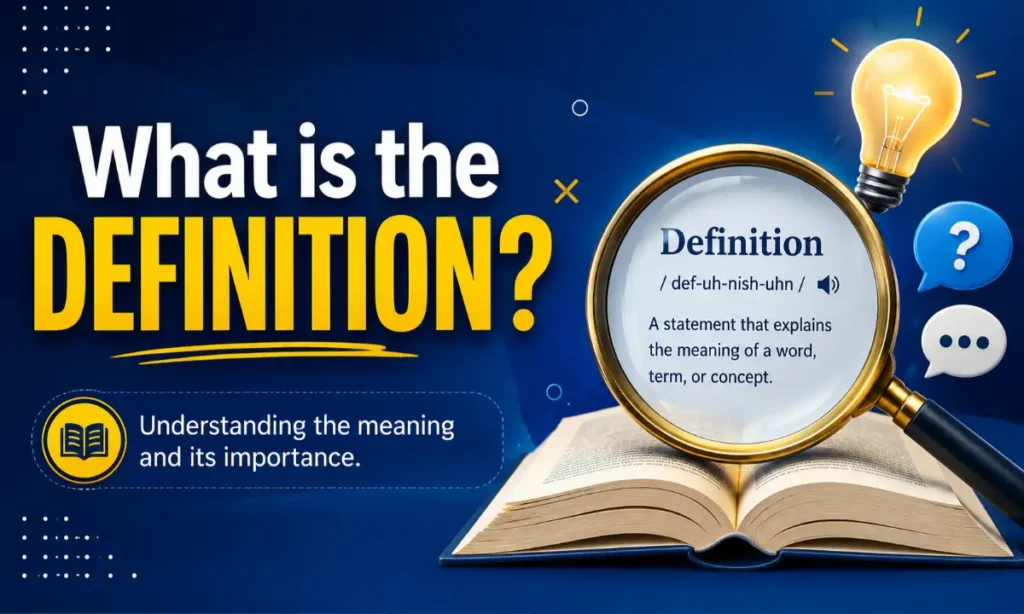
“What is the definition” asks directly for the precise meaning of something and becomes fully answerable once a subject is attached, as in “what is the definition of ubiquitous.” A strong definition stays simple, accurate, and free of unnecessary complexity, sometimes paired with a short example to show the term in real use. People searching this phrase usually want a quick, clear answer rather than a long academic breakdown.
What Is TBR?
As mentioned earlier, TBR commonly means “to be read” in online reading communities, referring to books someone plans to read soon. It shows up frequently on platforms like Goodreads, TikTok, and Instagram among readers sharing their upcoming book lists. TBR can carry different meanings in other fields, so checking the surrounding conversation always helps confirm which definition applies.
Meaning or Definition
“The” is formally classified as a definite article, a small grammatical tool placed before nouns to show that a specific item or group is being discussed. English has exactly one definite article, unlike many languages that use different forms depending on gender or number. Think of “the” as a spotlight, highlighting one particular thing so everyone understands exactly which one is meant. Notice the shift here: “I saw a dog in the park” introduces any dog, while “the dog was chasing a ball” refers back to that same specific dog. This word appears in roughly seven percent of all English text, making it the single most frequently used word in the language.
Grammar or Correct Usage
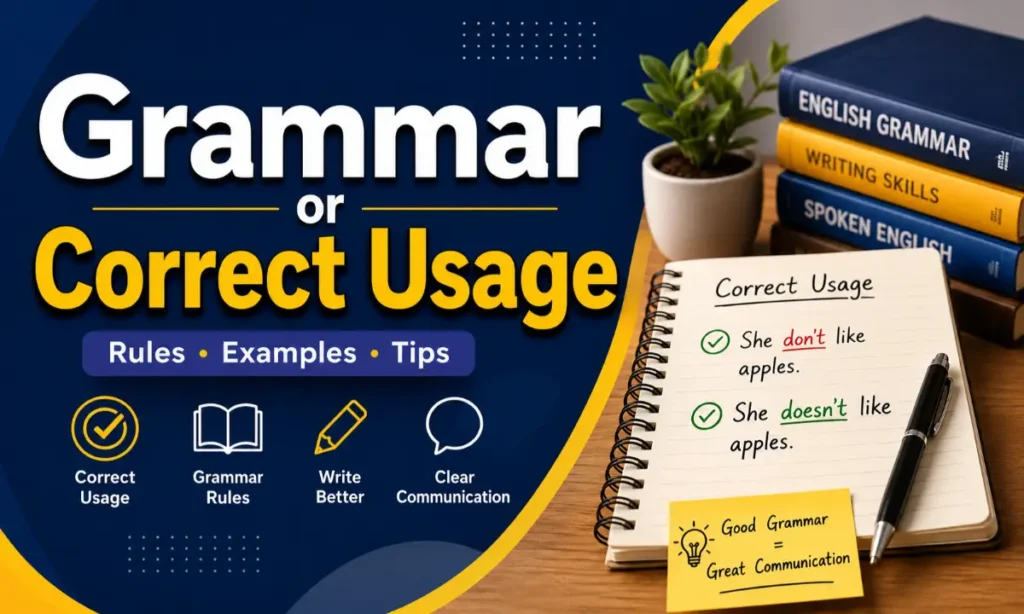
Deciding when to use “the” comes down to whether a noun is specific within its context. A handful of core rules cover most situations. First, use “the” when only one of something exists in the given context, as in “the sun rises in the east,” since there is only one sun visible from Earth. Second, use it once something has already been mentioned, such as “I bought a new book; the book is about history.”
Third, “the” pairs naturally with superlatives like best, tallest, or most, as in “she is the smartest student in the class.” Fourth, certain unique places take “the” by convention, including rivers, oceans, and select countries, as in “the Nile River” or “the United States.” Fifth, most personal names, city names, and country names skip the article entirely, so “London is beautiful” stays correct without “the London.” Pronunciation shifts as well: “the” sounds like “thee” before vowel sounds, as in “the apple,” and like “thuh” before consonant sounds, as in “the book.”
Situation: Specific item. With “the”: The car in the garage. Without an article: Cars are expensive.
Situation: Unique things. With “the”: The moon is bright. Without an article: Moonlight helps plants grow.
Situation: Previously mentioned. With “the”: The teacher explained it. Without an article: Teachers work hard.
Situation: General truths. Typically avoid “the” here. Without an article: Water boils at 100°C.
Situation: Superlatives. With “the”: The highest mountain. Without an article: High mountains are challenging.
Origin or History
The word “the” traces back to Old English, where different forms such as se, seo, and þæt marked masculine, feminine, and neuter nouns separately. Over several centuries, these distinct forms gradually merged into the single, unchanging word English speakers use today. In Middle English, writers sometimes used a letter called thorn, which resembled a y in certain old printing styles, giving rise to signs like “Ye Olde Shoppe.”
Despite appearances, that phrase was never pronounced with a y sound; it was always spoken as “the.” This gradual simplification reflects a broader pattern in English grammar, where articles became easier to use compared with languages like Spanish or French, which still adjust articles based on gender and number.
British vs American English
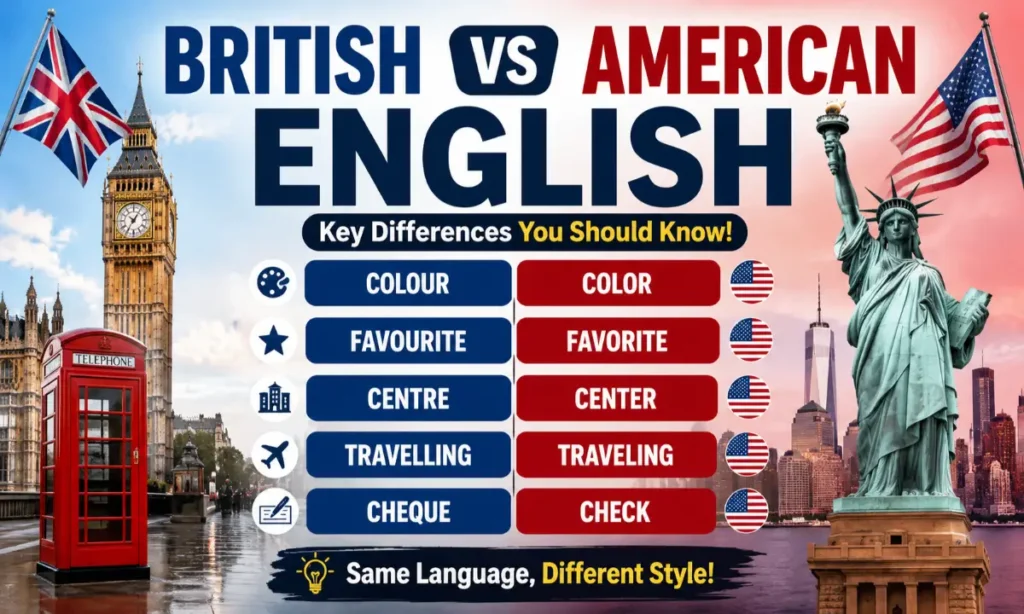
British and American English generally treat “the” the same way, with only a few small differences worth noting. Americans typically say “in the hospital” for a general stay, while some British speakers say “in hospital” without the article in that same context. Certain institution names and sports references can also vary slightly between the two dialects. Overall, though, the core rules governing “the” remain highly consistent across both varieties, so learners rarely need to worry much about regional variation on this particular point.
Common Mistakes
Even confident English speakers occasionally misuse “the,” though learners tend to make these slips more frequently. One common error involves adding “the” to general statements, incorrectly writing “the dogs are loyal animals” instead of the correct “dogs are loyal animals.” Another involves forgetting “the” when referring to something specific, writing “I like movie we watched yesterday” instead of “I like the movie we watched yesterday.” Proper names cause trouble too, since “the Mount Everest is tall” should simply read “Mount Everest is tall,” while mountain ranges like “the Himalayas” do take the article. Pronunciation slips matter as well, since saying “thuh apple” instead of “thee apple” can sound noticeably off to native speakers.
Mistake: The life is short. Correct: Life is short. Why it matters: General truth, no article needed.
Mistake: She goes to the school every day. Correct: She goes to school every day. Why it matters: Routine activity.
Mistake: I visited the Paris last summer. Correct: I visited Paris last summer. Why it matters: City names usually skip the article.
Mistake: This is best option. Correct: This is the best option. Why it matters: Superlative needs the article.
Mistake: The information are useful. Correct: The information is useful. Why it matters: Uncountable noun takes singular verb.
Real Life Examples
Picture standing in a grocery store and asking, “can you hand me the red apple on the top shelf?” Everyone understands exactly which apple, since “the” narrows it down to one specific item. At work, a message like “the report I sent yesterday needs the latest numbers” points to one particular report already known to both people. In daily news, a sentence like “the president spoke about the economy” relies on shared context to identify exactly which president and which economy.
Even young children pick up on this early, pointing at a favorite toy and saying “the ball.” Storytellers lean on it too, opening tales with phrases like “once upon a time, there was a king; the king had three sons.” Across all these examples, “the” quietly links ideas together and keeps meaning clear.
Current Usage or Trends

In modern digital writing, especially headlines and social media posts, articles often disappear entirely for brevity, turning “the man wins the lottery” into simply “man wins lottery.” Despite this trend in short form text, proper use of “the” remains essential within full sentences and formal writing. As English continues spreading globally, correct article usage plays a real role in business communication, education, and travel for non native speakers navigating a new language. Modern apps and AI powered writing tools now flag article errors automatically, helping learners catch and correct mistakes faster than traditional classroom methods alone.
Tips or Best Practices
Building comfort with “the” comes down to consistent, practical habits rather than memorizing endless rules. Reading simple English books or news articles aloud while paying attention to every instance of “the” trains the ear to notice patterns naturally. Describing everyday surroundings, such as “the lamp is on the table next to the window,” turns grammar practice into something concrete and immediate. Listening to podcasts and repeating sentences back helps reinforce both pronunciation and placement.
When uncertain, a simple test works well: ask whether the noun in question is specific, and if the answer is yes, “the” almost always belongs there. For uncountable nouns like water or happiness, save “the” for moments when referring to something particular, as in “the water in this bottle is cold.” Making flashcards with paired examples, one general and one specific, and reviewing them daily for a week tends to produce noticeable improvement fairly quickly.
Frequently Asked Questions
What is the word “the” in grammar?
“The” is the definite article, used to refer to a specific person, place, thing, or idea already known to speaker and listener.
What is the meaning of this symbol?
The meaning of any symbol depends entirely on its design and the context surrounding its use.
What is the meaning of the term?
A term is simply a word or phrase carrying a specific meaning within a particular subject or field.
What is the meaning of the following?
This phrase depends completely on whatever word, sentence, or content comes directly after it.
What is the meaning of the name?
A name’s meaning shifts based on its origin, the language it comes from, and its cultural background.
What is the definition of rizz?
Rizz is a slang term describing someone’s charm or natural ability to attract and impress others.
What is the meaning of the word?
A word’s meaning is simply its definition, or the idea it represents within a given language.
What is the meaning of the world?
Depending on context, this phrase can point toward life’s purpose, broader significance, or simply the physical planet itself.
Conclusion
Understanding what “the” is and learning to use this definite article correctly stands as a genuinely important step toward fluent, natural English. This small word carries far more weight than its size suggests, helping speakers and writers point to specific things clearly rather than leaving meaning vague or ambiguous. From its roots in Old English forms like se and seo through centuries of gradual simplification, “the” has settled into the single, reliable article used across every English speaking region today.
The central takeaway worth remembering is straightforward: reach for “the” whenever something is specific, unique, or already known to both people in the conversation, and skip it for general statements and most proper names. Reviewing the tables throughout this guide, practicing with real sentences pulled from daily life, and listening closely to native speakers all reinforce these patterns over time far better than memorization alone.
Continued practice through reading, speaking, and writing turns these rules into instinct rather than conscious effort. Whether preparing for school, professional communication, or travel abroad, strong grammar habits including confident use of “the” open real doors. Start noticing this small but powerful word in everyday conversations today, and steady improvement in overall English fluency will follow naturally.

I am the author and content creator behind MeaningCart.com, a knowledge-focused blogging website dedicated to helping readers understand words, meanings, definitions, vocabulary, translations, phrases, idioms, abbreviations, names, and everyday concepts. With a passion for language, research, and clear communication, I create simple, accurate, and easy-to-understand content for readers of all backgrounds.
My goal is to make learning more accessible by explaining complex information in a clear and practical way. Through MeaningCart.com, I share helpful, well-researched, and SEO-friendly articles that help readers discover the meaning behind words and expand their knowledge every day.